Tallaght and Weiz-Gleisdorf: using local conditions for a decarbonised heating provision
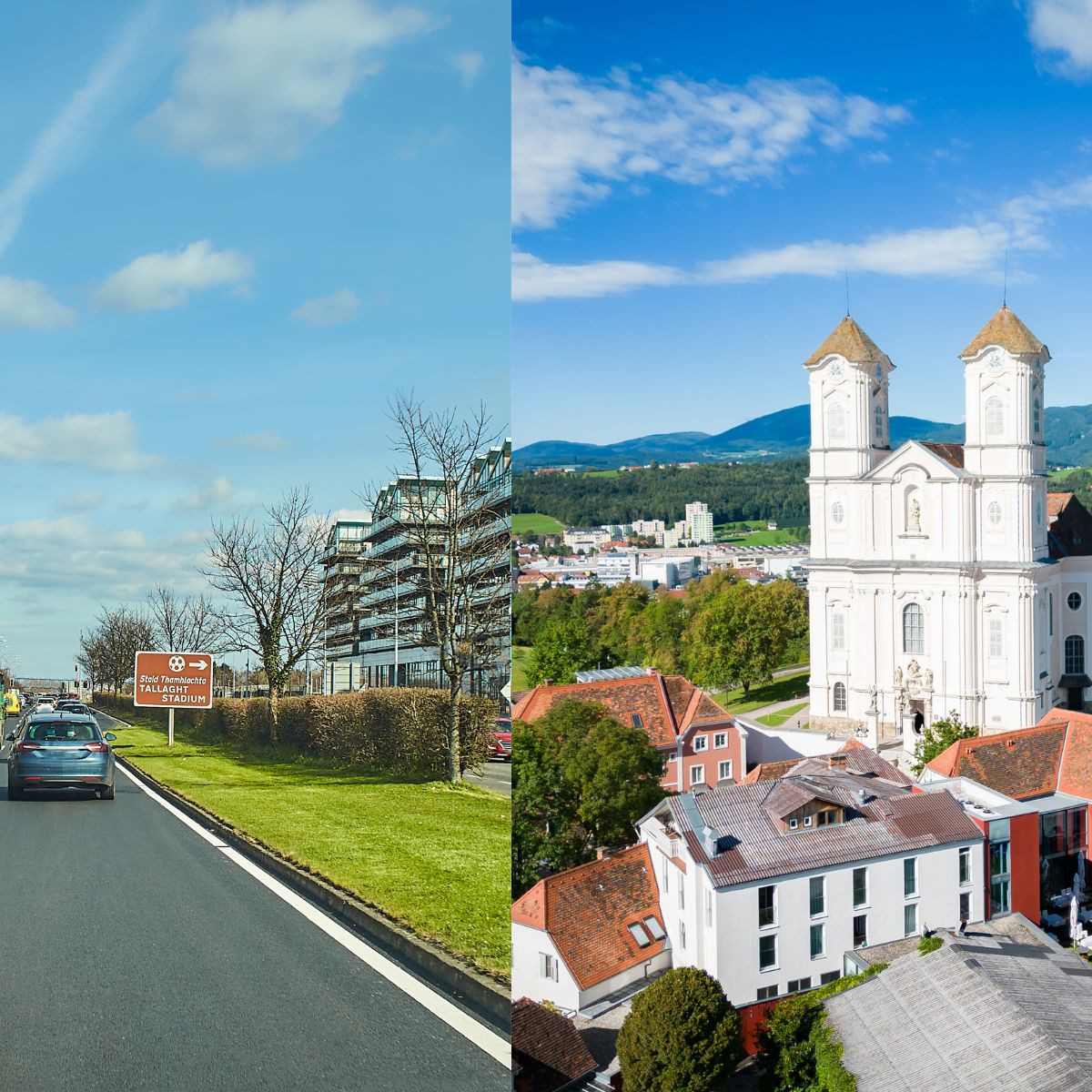
At first, Tallaght, on the outskirts of Dublin, and the municipalities around the Weiz-Gleisdorf axis, in southeastern Austria, do not seem to have much in common. On closer inspection, however, they share an important asset: both use local resources to substitute fossil fuels in their heating generation.
Ireland has become Europe’s tech hub in recent years; many giants in the sector, such as Google and Amazon, have established their European headquarters in the country, boosting its economy after the euro crisis in the early 2010s. Now, with the growth of artificial intelligence (AI), data centres are multiplying across the country. An untapped potential, until very recently almost ignored by public authorities and private actors, is the connection between these centres and the local heating networks. Data centres produce constant heat at around 25 to 45°C. This waste heat normally goes unutilised and is lost into the air. When coupled with heat pumps, however, they offer a good source of clean, reliable, and locally sourced heat.
In short (and oversimplified), the heat is captured by large heat pumps, which in turn upgrade the heat using renewable electricity to the district heating network’s operating temperature. This heat is then delivered to customers through underground pipes. That is how Tallaght’s network functions.

Tallaght is the first place in Ireland with such a system. The Amazon data centre nearby provides its waste heat to the network. It is a mark for a country still heavily reliant on fossil fuel imports for its heat generation. It serves 5 public buildings and 1 apartment with 133 flats along the 3.8 km of pipelines installed so far. Despite its current small size, the system’s operator is ambitious. The ENABLE DHC project is supporting the development of an investment plan that will allow for its expansion and optimisation, ensuring it complies with ever-more rigorous legislation. The plan is also to include a thermal energy storage facility, allowing for better management of the system, especially during peak periods, and to incorporate other sustainable heat sources to match the growing demand expected in the coming years.
A similar story is unfolding in Austria. The region around the cities of Weiz and Gleisdorf may not have large data centres nearby, but the region is blessed with abundant forests. They provide biomass to the systems, a renewable and green source that is responsible for most of the heat generation in the region. The wood chips power boilers, which heat water up to 105°C.
Together, the axis is around 77 km long and supplies heat to approximately 1,200 customers. They have partnered with three other nearby cities—Unterfladnitz, St Ruprecht, and Wollsdorf—to create a heat corridor, coupling the current separate networks into a bigger system. This will bring many benefits for the operators. The most evident one is the opportunity to install thermal storage tanks, storing excess heat from times of low demand. A bigger, unified system will also facilitate the management of the network, allowing for optimisation of assets and reduction of heat losses. These improvements are part of the investment plan being developed by the ENABLE DHC partners.
The current strains in fuel supply due to the conflict in the Middle East, the ongoing war in Ukraine, and the shifting geopolitical landscape add extra layers of strain to the decarbonisation objectives envisioned by the European Union. The decarbonisation of heat supply is not only an environmental issue, but increasingly also a political, economic, and social one.
The cases of Tallaght and Weiz-Gleisdorf are just two examples of the huge potential for locally sourced fuels. All across Europe, there are a myriad of possible alternatives to fossil fuels for powering heat systems, including waste heat, biomass, solar thermal, geothermal, and efficient combined heat and power plants. They are, more than ever, a key asset for the continent’s transition, not only because they are green and do not depend on third actors, but also because they can give the systems enough flexibility to transition away from fossils without disrupting supply or causing price shocks.